
For generations, SMART members have used the power of our collectively bargained union contracts to build good lives for ourselves and our families. The stellar pay, good benefits and negotiated pensions that are a hallmark of our union have lifted up sheet metal and transportation workers over the years — even when pay stood still or went down for large parts of the working class.
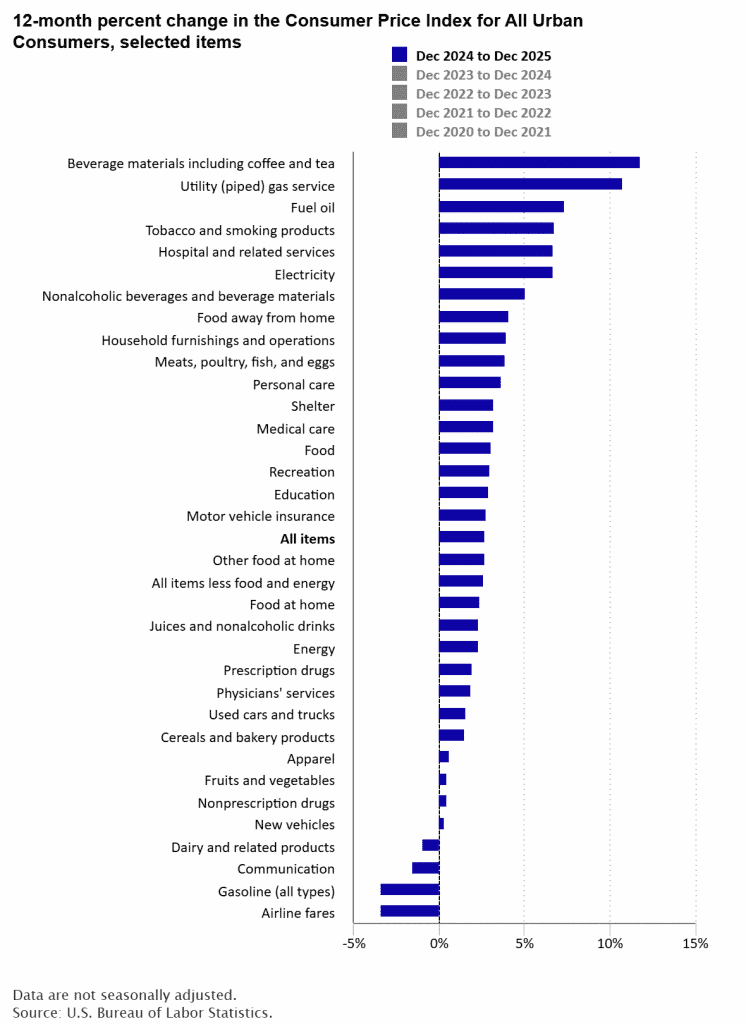
But despite the power of our contracts, SMART members and families still find themselves impacted by what has been called “the affordability crisis.” And in the United States, recent policies made by Congress and the federal government are consistently making life less affordable for working Americans, according to the Economic Policy Institute (EPI).
“At its core, affordability is shaped by whether workers’ paychecks keep pace with the cost of living,” a recent EPI report reads, explaining that the current crisis results from decades of policies that slowed or pushed down wage growth in the United States and chipped away at workers’ bargaining power. The EPI adds that the current presidential administration “has pursued an agenda that undercuts incomes for all but the wealthiest households, slows job growth, and invites employer exploitation and abuse—including unprecedented attacks on federal workers’ collective bargaining rights.”
The SMART Communications Department has identified some of the actions listed in the EPI report that make it harder for SMART members to afford the cost of living in the United States, listed below.
Federal policy damaged workers’ pay and economic security, including in the construction industry
- One part of the affordability crisis is an increase in the basic costs of living, such as utilities, health care and everyday essentials. But the other half of affordability is being able to pay for those essentials in the first place. A variety of policies passed by the Trump administration make it harder for workers to get the pay needed to afford basic necessities.
- For example: One of the most persistent ways bad-faith employers exploit workers in construction is by misclassifying them as independent contractors. In 2024, the U.S. Department of Labor published a final rule that made it harder for employers to do exactly that.
- But the current administration’s Department of Labor stopped enforcing these misclassification protections. This not only means working Americans will lose overtime, minimum wage and workers’ compensation pay; it lowers working conditions and safety standards on the jobsites where SMART members make their living.

The administration’s approach to construction and energy policy has hurt job creation for SMART members
- Laws like the Inflation Reduction Act and the CHIPS Act had started to create jobs for SMART members on a variety of huge projects, including clean energy projects, chip plants, public transportation infrastructure and more.
- But the Trump administration paused funding for projects authorized under the Inflation Reduction Act, threatening millions of jobs — many of which would have been for SMART members.
- Congress passed, and the president signed into law, the One Big Beautiful Bill Act. This law is estimated to give $1 trillion in tax cuts for the richest 1% in the country. It will likely cause more than 15 million people to lose health insurance. And it will lead to lost jobs for SMART members on clean energy projects that will no longer have funding.
- The administration’s tariff policy caused chaos in the manufacturing and construction industries. Uncertainty resulting from the tariffs helped lead to a steady decline in manufacturing jobs in 2025.
Executive orders and policies weakened workers’ rights across industries
- Executive orders that threatened collective bargaining, moves that make it harder for government agencies to protect and empower workers, and the appointment of corporate-aligned officials — these approaches have made it harder for SMART members to stand up for themselves and make ends meet.
- The president issued an executive order that eliminated more than one million federal workers’ right to collectively bargain, taking away their union contracts and representation with the stroke of his pen. SMART members working at U.S. Naval Shipyards were among the workers who were impacted.
- The president fired the general counsel of the National Labor Relations Board (NLRB), Jennifer Abruzzo. Abruzzo had worked to strengthen unions and collective bargaining during her time at the NLRB. General President Michael Coleman called her a “champion” for SMART members.
- The president’s nominee for NLRB general counsel was a lawyer at one of the largest union-busting law firms in the country.
- The president revoked a “Good Jobs” executive order that promoted labor standards which benefited SMART members on projects with funding from the Bipartisan Infrastructure Law, CHIPS Act, Inflation Reduction Act and/or the American Rescue Plan Act. The previous executive order, rescinded by the president, had incentivized the use of project labor agreements, high-paying, prevailing wage jobs, and more.
- The president picked the former leader of an anti-union organization to lead the Office of Labor-Management Standards, an agency that oversees the financial disclosures of unions, employers and union-busting consultants.
- The president fired a member of the NLRB for “disfavoring the interests of employers,” undermining the independence of a crucial agency for SMART members and making it so the board was unable to do key parts of its job for months.
- The president issued an executive order on apprenticeships that does not require the federal government to consult with unions or labor-management partnerships, despite the key role unions like SMART play in registered apprenticeship programs. This risks taking funding from the proven, high-road training programs that SMART members depend on.

Unfortunately, this is an incomplete list of the governmental actions that negatively impact members and families.
SMART will continue our attempts to work with the federal government and urge them to change course. Our union will work with any politician, no matter their party, to benefit sheet metal and transportation workers.
Related News
- Michigan sheet metal worker details impact of canceled project
- GP Coleman on latest round of job cancellations
- Canceled federal funding threatens SMART members’ jobs at port projects
- Department of Transportation cancels more than $300 million in funding for Mass. megaproject
- Canceled Cleveland-Cliffs project leads to lost jobs for Dayton-area construction workers
- 2025 spending bill will cut jobs, drive up costs for SMART members nationwide
- General President Coleman’s statement on the Department of Energy canceling $3.7 billion in funding awards for energy projects
- Cuts to tax credits and infrastructure funding threaten SMART jobs: GP Coleman’s statement