In the summer of 2025, SMART Local 170 (Pico Rivera, California) recognized and celebrated the incredible career and lasting impact of Mario A. Vega, who retired after 42 years of dedication to SMART as a member, leader and strong advocate for the union­ized production and manufacturing industry.

Left to right: SMART Regional Organizing Director Manuel Gonzalez, Local 170 Dues Administrator Vanessa Medina, Maria Vega, retired Local 170 Business Manager Mario Vega, Local 170 Business Manager Roberto Torres-Muniz and Gloria Rodelo, Local 170 office manager

Brother Vega joined Local 170 in 1983. Two years later, he was appointed a shop steward at Simpson Strong Tie. His commitment soon earned him the trust of the membership, which elected him, in 1990, to both the Local 170 Executive Board and as a trustee of the Local 170 Group Insurance Benefits Trust.

On April 1, 2015, Vega became a Local 170 business representative, and after two years, he was elected to serve as the local’s business manager and financial secretary-treasurer. From then until his retirement, Brother Vega devoted himself to organizing, advo­cating and empowering his union brothers and sisters as business manager. His leadership helped secure fair wages, strong benefits and dignity on the job for count­less members.

Throughout his career, Vega has been more than a leader in our union. He has been a mentor, a friend and a source of inspiration. His contributions have shaped not only our organization but also the lives of countless colleagues and workers in the production industry.

“As Mario moves into this well-earned chapter of his life, we want to thank him for all he has given and wish him and his wife, Maria, health, joy, relaxation and new adventures in retirement,” the local wrote. “Congratulations, Mario! You have truly made the differ­ence at SMART Local 170 — and you will be deeply missed. On behalf of the entire local, we sincerely congratulate you on your retirement. Your contributions have been invaluable, and your legacy will endure in the history of our organization.”

Local 9 (Colorado) member Jacob Stone recently completed his appren­ticeship capstone assignment in impressive fashion, crafting a custom copper lantern featuring acid etching and intricate design work.

“The craftsmanship speaks for itself,” Local 9 wrote. “Beyond the shop, Jacob also serves as a sergeant in the U.S. Army Reserves, balancing mili­tary service with apprenticeship training — an incredible commitment that deserves recognition.”

Great work, brother!

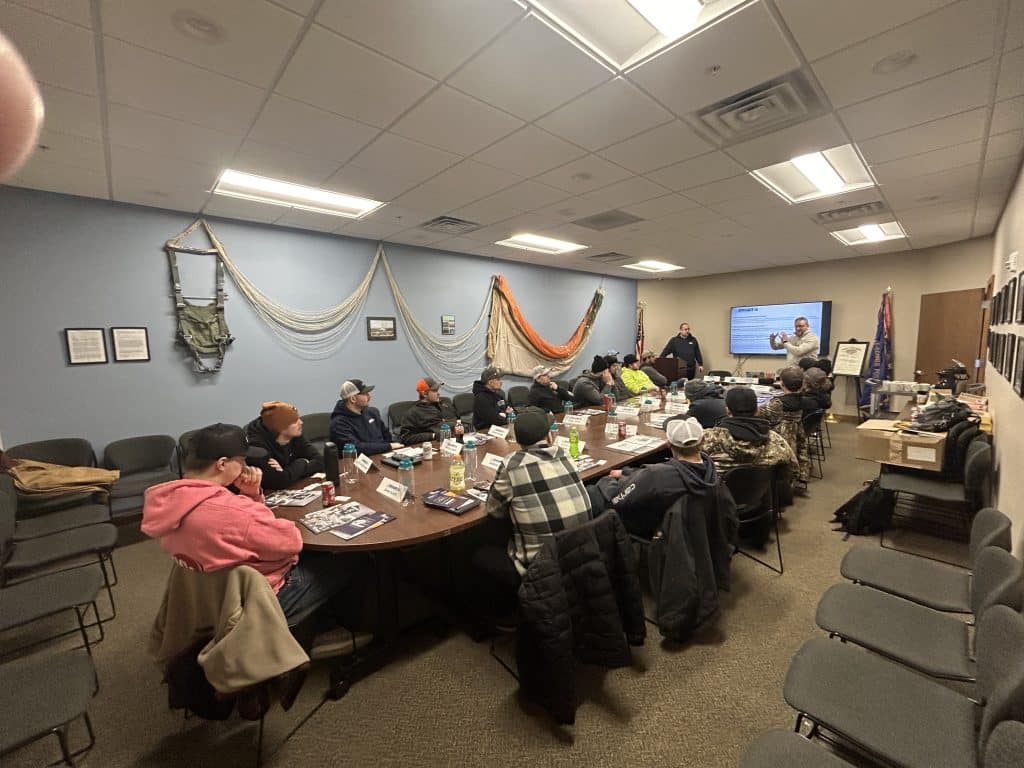
Second-, third- and fourth-year apprentices braved the Wisconsin winter cold to attend Local 18’s Wausau-area Construction Organizing Mem­bership Education Training (COMET) classes in January.

Local 18’s COMET class aims to get members involved early in their careers, teaching them about the labor movement, the benefits available to them through their union and their collectively bargained contracts, and much more. As former Local 18 Organizing Director Hallie Jennerman wrote in 2024, the local’s COMET curriculum is intended “to forge growth in our membership through organizing, growth in our markets, growth in our benefits through additional hours worked, and to give those behind us a future by creating engaged, active members who will carry our union forward and organize all unrepresented sheet metal workers.”

In January 2026, Local 18 apprentices learned together and strengthened their bonds of union solidarity — despite the -10 degree temperature on the day of the class.

Members of Local 296 in Sas­katchewan are in a period of stability and opportunity, supported by steady construction activity across the province and a significant milestone recently achieved for the trade.

Contractors are reporting a mix of commercial, industrial and maintenance work, creating consis­tent employment opportunities and allowing companies to plan years ahead. With projects already being bid on for 2027 and beyond, Business Manager TJ King says the outlook is strong.

“We’re not just in a good spot, we are in a great spot with steady work,” said King. “We aren’t in a boom-or-bust mentality, and stability is what matters most for our members.”

Director of Canadian Affairs Jack Wall with members of the Western Conference, including the Conference Recording Secretary and Local 296 Business Manager TJ King

Megaprojects across the province are driving demand for Local 296’s skilled workforce. Among them is the $9 billion Phase 2 expansion of the BHP Jansen Potash Mine, along with new schools, power plants, hospitals, uranium mining developments and long-term care homes. Upcoming projects in Saskatchewan’s nuclear sector are also expected to generate work well into the next decade.

With opportunity comes the need for preparation. King says members who take the initiative to pursue additional training and certifica­tions will be best positioned to take advantage of the work ahead.

“There are a lot of opportunities here,” King said. “Preparation is what separates those who will get the opportunities, those willing to go out, obtain the required certifications and keep themselves at the highest level of skill.”

The local is also focused on strengthening its membership through organizing efforts, new initiatives and outreach to bring more workers into the trade. King says that growth must be inclusive.

“If we want women to stay and advance in our trade, we need spaces where their voices are heard and supported,” he said. For that reason, the local is starting a women’s committee to help ensure women have a dedicated forum to connect, raise concerns and support one another in the trade.

Another major milestone for Saskatchewan’s sheet metal workers is the official designa­tion of Architectural Sheet Metal (ASM) as a recognized sub-trade, a development more than 14 years in the making. Previously performed without a formal training pathway or certification, this work now has a clear and recognized structure along with a trade designation.

This change will provide roughly 200 members with formal recog­nition for the skills they’ve been practicing and the opportunity to obtain official certification in their field.

For King, the achievement reflects the local’s commitment to strength­ening the trade while preparing members for the future.

“We are focused on stability, oppor­tunities and growth for tomorrow, in an effort to set up our members for long, successful careers.”