On Monday, March 9, the Trump administration’s Department of Labor (DOL) issued new guidance regarding registered apprenticeship programs. SMART General President Michael Coleman gave the following statement in response:

“I’ve said since January 2025 that I’m committed to calling balls and strikes with this administration. Calling for one million new apprentices? That’s a strike. Getting to one million apprentices by lowering the standards and potentially damaging our union’s apprenticeship programs? That’s a ball, no question.

“Our union’s registered apprenticeship programs are the bedrock of the sheet metal industry — for workers, for union contractors and for our country. Through our strong registered apprenticeships, working Americans get trained at the highest standards, make a living while learning the trade, and build the infrastructure that our communities rely on. This has set the bar for our industry and our nation for generations.

“But this model depends on rigorous standards that apprenticeship programs must meet to avoid undermining our high-quality training — and the Department of Labor’s guidance puts those standards at risk. This guidance would encourage apprenticeship programs to focus on speed instead of skill development, create a 30-day ‘shot clock’ for the DOL to rubber stamp new programs in a rush, and increase flexibility for employers — potentially reducing the current emphasis on protecting workers and creating opportunity for all apprentices.   

“There’s a lot more to be said about this dangerous guidance. But I’ll get straight to the point: This is a threat to SMART members, our families, our apprenticeship programs and tradespeople everywhere. We urge the Department of Labor to change course, and we call on the president to stand up for our nation’s workers by strengthening the standards that protect them.”

National Careers in Trades Week (NCIT), which takes place April 6-10, 2026, comes at an opportune time for people seeking skilled trades jobs: rewarding, essential careers with excellent pay and strong benefits, including healthcare and pensions. While United States workers are experiencing a stagnant job market with fewer job postings and positions that are harder to secure, well-paying skilled trade job openings look set to grow in the near future.

“There is a lot that has changed about our country over the years: technology, artificial intelligence, you name it. But one thing that won’t ever change is this simple fact: We need skilled trades workers to build our country,” said SMART General President Michael Coleman. “SMART members are doing that from coast to coast, whether building new hospitals, ensuring air quality in schools or making sure apartment and office buildings run as efficiently as possible. We’re excited to shine a light on the many career paths available to workers in our industry during National Careers in Trades Week — and well beyond.”

According to the U.S. Bureau of Labor Statistics (BLS), professions in the skilled trades will experience faster-than-average job growth between 2024 and 2034, with the Occupational Outlook predicting over 600,000 construction job openings each year and a current median annual wage of $58,000 (up from $55,000 in 2025). Median pay is even higher for full-time construction workers who are union members, who have a median wage that is $23,556 higher per year compared with full-time nonunion construction workers (based on BLS median weekly earnings data).

Additionally, apprenticeships in the skilled trades, like those at SMART local unions, provide the opportunity to earn while learning and enter the workforce without debt — an especially relevant piece of information for young people and their parents.

New research conducted by Wakefield Research on behalf of SMACNA shows that 75% of teens aged 13-18 would consider a trade job over going to college. The most compelling reasons for teens opting for a trade over college are higher pay, good benefits and paid apprenticeships, cited by 30% of teens. Other considerations that would sway a teen to the trades include opportunity to be promoted (24%), knowing a job is vital to the economy (21%) and the number of available trade positions growing faster than the average job (19%).

“Skilled professions offer rewarding career opportunities for all people, including young adults, women, veterans and anyone who is looking for a career change,” said SMACNA CEO Frank Wall. “The wages and job security that trade careers offer provide a faster means to home ownership, upward mobility and saving for retirement that other pathways don’t always ensure.”

In addition to the SMART, SMACNA and International Training Institute (ITI), who led the initiative in 2025, other trade groups have joined National Careers in Trades Week to build awareness for all they have to offer and how their disciplines leave lasting legacies on society. These include the Mechanical Contractors Association of America (MCAA), National Energy Management Institute (NEMI), the National Electrical Contractors Association (NECA) and the Sheet Metal Occupational Health Institute Trust (SMOHIT).

Throughout National Careers in Trades Week, cross-industry visibility efforts will showcase the benefits of choosing careers in the skilled trades among job seekers and the American public. The goal is to fill the hundreds of thousands of jobs that are essential to national and global economies and infrastructure projects, including, for example, the construction of chip plants, stadiums, healthcare facilities, factories and data centers.

SMART sheet metal members — whether they’re HVAC technicians, industrial welders, architectural sheet metal workers, testing, adjusting and balancing specialists, or in one of the many other professions the sheet metal trade encompasses — know well the many perks of a career in our union and our industry. As we continue to build North America, our union will work to make sure Americans and Canadians know about those opportunities as well.

That’s how we secure the future for our trade, our industry and our union.

The 2026 research was conducted by Wakefield Research on behalf of the SMACNA among 500 U.S. parents of kids currently enrolled in high school or college between January 13-21, 2026, using an email invitation and an online survey.

SMART apprenticeship programs are a core part of our union’s foundation. Across North America, local apprenticeships help ensure the future of our union. They change lives, helping working people enter fulfilling careers in the sheet metal industry. And on top of that, they benefit communities across the United States and Canada, setting the standard for craftsmanship, skill and training.

For all those reasons, it is vital that we always work to uphold the high-quality apprenticeship standards that define our union.

In 2025, the Northern Nevada Sheet Metal & HVAC Apprenticeship (SMART Local 26) was formally notified by the Nevada State Apprenticeship Council (NSAC) that a nonunion contractor association had applied to establish a parallel apprenticeship program for sheet metal workers (O*NET 47-2211.00). Under Nevada Revised Statutes (NRS) 610.144, a parallel program cannot be approved unless it is proven to be at least equivalent in quality and content to existing registered programs. This requirement initiated a formal review and special hearing process for the nonunion program.

After conducting a comprehensive evaluation of the proposed standards, curriculum and supporting documentation, SMART Local 26 identified several concerns, including the clarity of training hour requirements, the level of detail in the proposed curriculum, documentation requirements for instructors and facility staff, the use of objective assessment standards and whether the proposed standard provided training across the full scope of sheet metal work in Nevada. A detailed letter of opposition was submitted to NSAC outlining these concerns. The hearing, originally scheduled for September 2025 and later reconvened on January 8, 2026, included testimony from SMART Local 26 and SMART Local 88 (Las Vegas) leadership, training center representatives and legal counsel.

Following review of the written record and testimony, the Nevada State Apprenticeship Council denied the proposed parallel program.

This decision reaffirmed the statutory protections within NRS 610.144 and upheld the integrity and quality of Nevada’s registered apprenticeship programs. It is also proof that parallel apprenticeship programs are not automatically approved and must clearly demonstrate equivalency in scope, structure and accountability. That is more important than ever to remember as SMART works to protect apprenticeship standards across North America.

Thanks to proactive organizing from stakeholders in Nevada’s unionized sheet metal industry, local unions and community members can count on the rigorous standards they’ve come to expect in apprenticeship programs.

That’s how we secure our future!

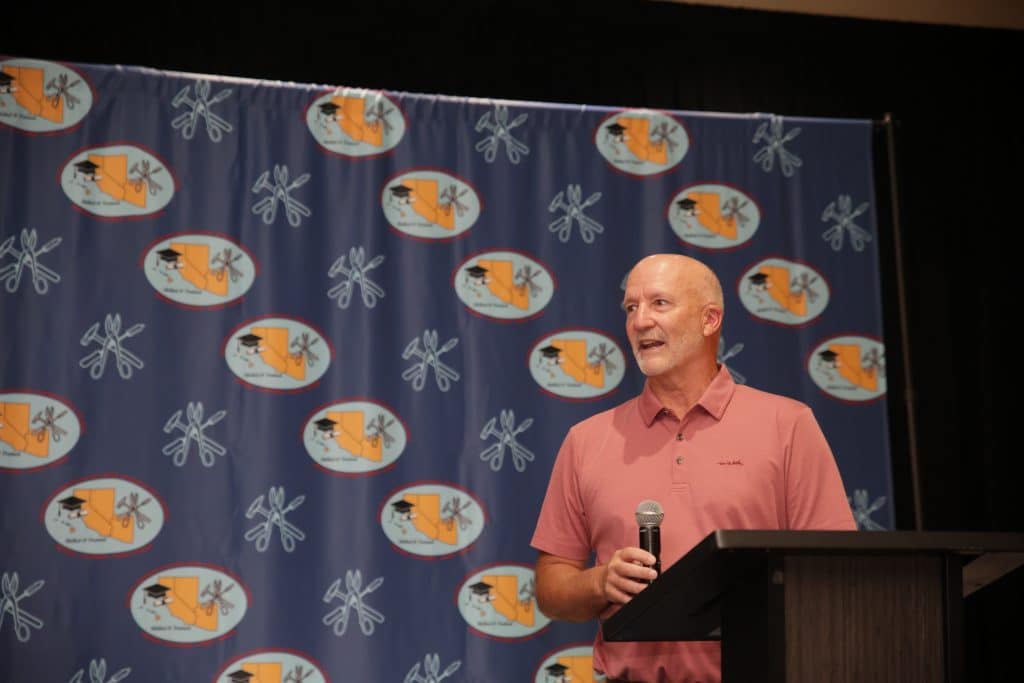
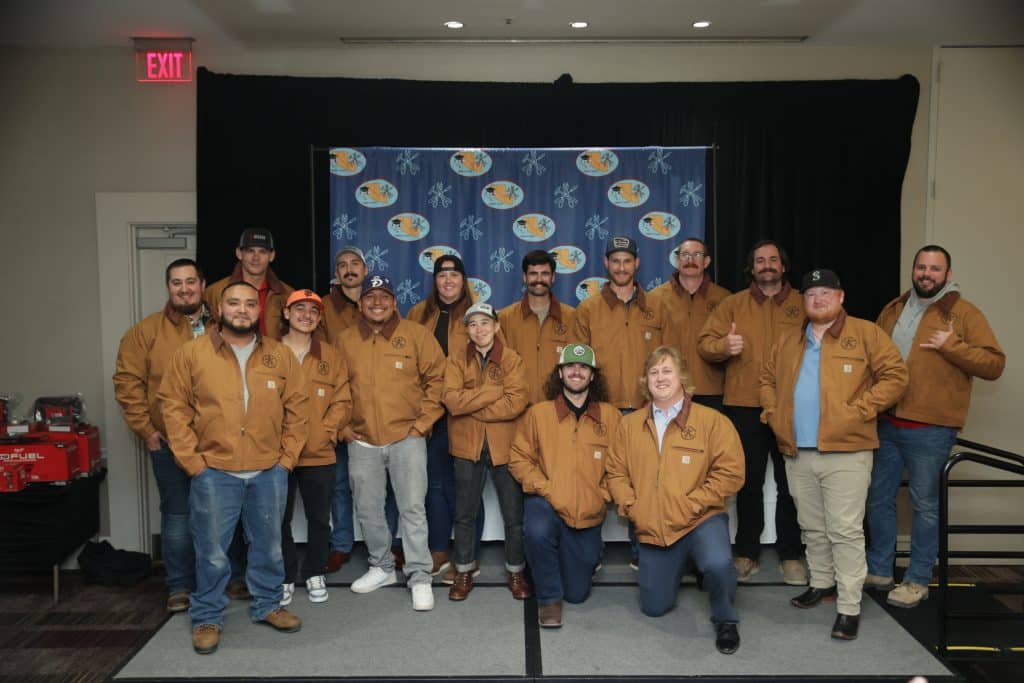
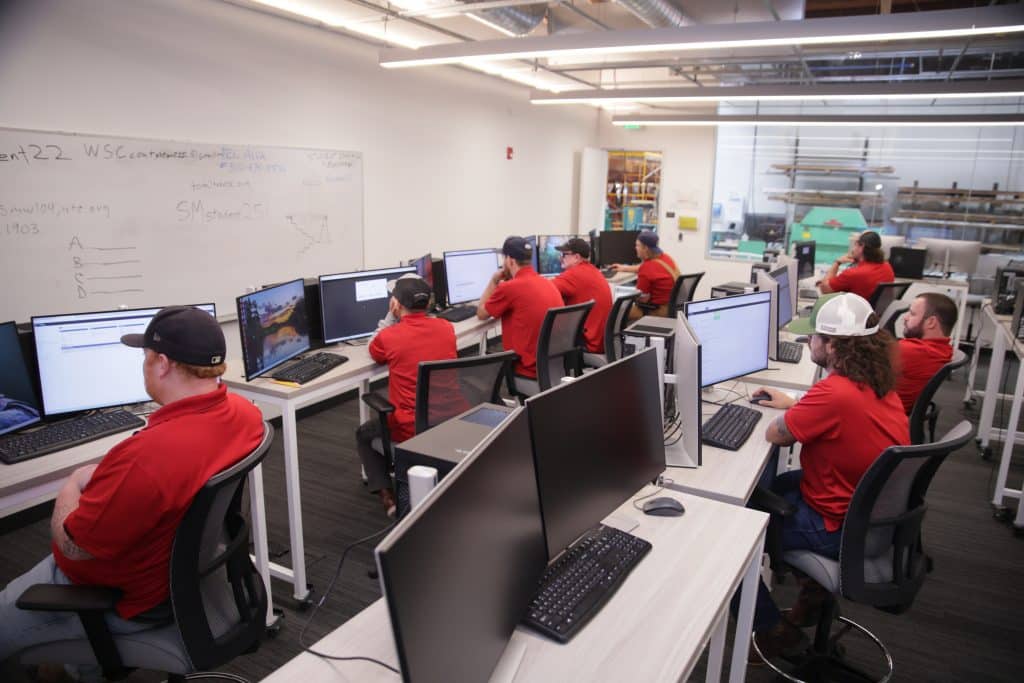
SMART Local 104 and the Bay Area Industry Training Fund hosted the Western States Apprentice Contest on July 18-19, 2025, at its Livermore, California, training center. Sixteen apprentices from five locals participated in the first contest in the region since 2011. Another first: the addition of the project management category, which made its debut for the first time at any regional contest.

California, Nevada, Arizona and Hawaii make up the SMART Western States Region, and apprentices and coordinators from Local 104, Local 105 in Southern California, Local 206 in San Diego, Local 359 in Phoenix, Arizona, and Local 26 in Sparks, Nevada, were represented at the contest. Each training program was allowed to send one competitor per 300 apprentices.

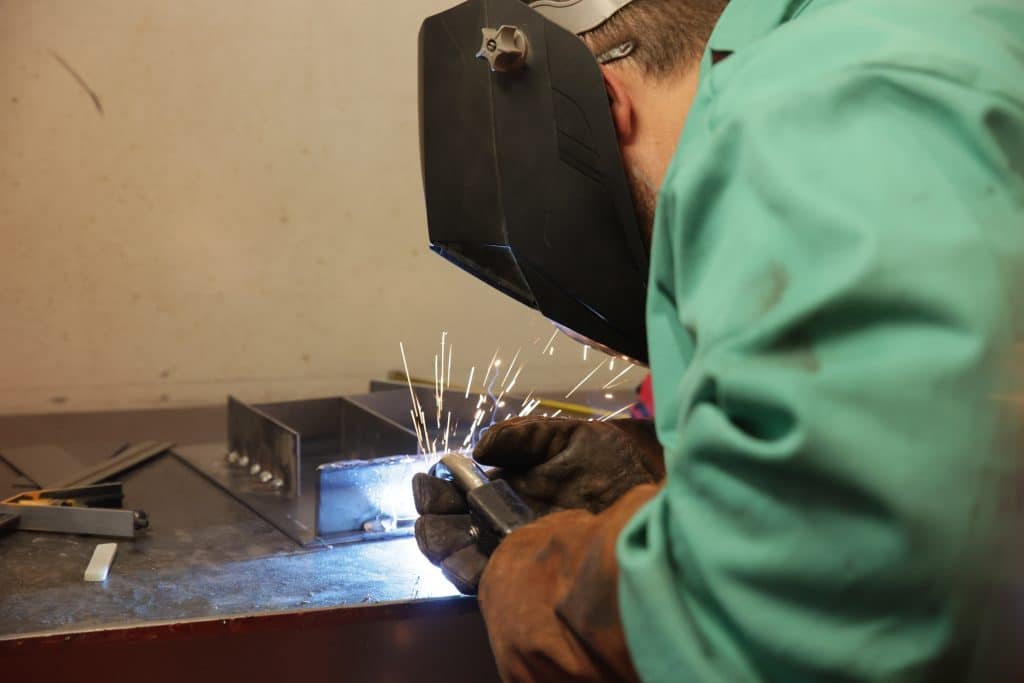
The competition projects were divided into four categories: architectural, HVAC, industrial/welding and project management, which tested apprentices on their organizational skills and attention to detail in a leadership position.

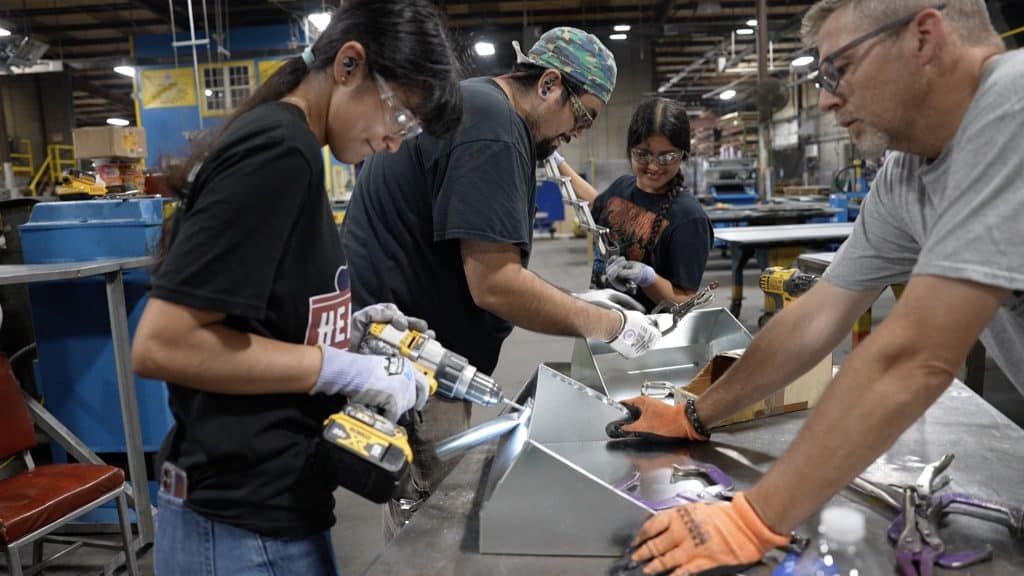
To compete, apprentices worked long days designing a gutter system, fabricating and installing a duct system, and performing field verification and site measurement. Working side by side, then decompressing together after tasks, they were forging connections with other future industry leaders.

In the new project management category, Austin Cummings, a third-year apprentice at Local 105, placed first, with Alex Giroux of Local 104 earning second place and Rebecca Suen of Local 104 placing third.

In the architectural category, Esteban Mercado, a third-year apprentice at Local 104, took first place, and there was a three-way tie for second place: Trevor Baker of Local 104, along with Dillon Uhern and Richard Morrison, both of Local 105. Giroux came in third.

In the HVAC category, there was a tie for first place between Mercado and Morrison. Baker took second, and Uhern came in third.

For the industrial/welding category, Uhern took first place with Suen in second and Tristan Haynes of Local 104 in third place.

Scores from all categories were combined to award the overall winners, and the honor of first place overall went to Morrison, with Cummings in second place and Uhern in third.

“Coming out of it, I thought I did all right but didn’t expect this,” Morrison said. “I prayed a lot.”

After years with no regional contest, this one came together thanks to an apprentice contest grant from the International Training Institute (ITI). Milwaukee Tool, a longtime partner with the sheet metal industry, generously donated an array of prizes.

Tim Myres, administrator for Sheet Metal Workers’ Local 104 and Bay Area Industry Training Fund, was a driving force behind restarting this contest, and training coordinator Nate Vennarucci and instructor Ben Alva, both from Local 104, put in the work to create and test the projects used in the contest, a process that began in October 2024.

Jason Ferguson, ITI field representative, was on hand to support the event and meet face-to-face with coordinators. He said the sense of accomplishment you feel as an instructor or coordinator, watching your apprentices succeed, is even greater than winning yourself.

“These apprentices are your future leaders, and today they’re getting to know others in the industry,” Ferguson said. “Intentional or not, they’re collaborating, they’re strengthening those relationships.”

The SMART Southwest Gulf Coast Regional Council held its first-ever apprenticeship competition in spring 2025, bringing together hardworking appren­tices from Local 54 (Waller, Texas), Local 68 (Dallas, Texas), Local 67 (San Antonio, Texas) and Local 214 (Baton Rouge, La.) to demonstrate their craftsmanship and dedication to our trade.

Milwaukee Tool donated tool­boxes and tools for the contestants, with DeWalt also contributing tools.

The overall winner was Local 54, with apprentices Derek Long, Michael Jerry and Justin Woods taking the championship with their combined total score. Jason Delgado of Local 68 won first place in the HVAC category; Kade Lalonde (Local 214) took first in the Architectural category; and Zane Prejean (Local 214) won the Industrial category. Cooper Ross of Local 67 won the screw-off cham­pionship, receiving the prized championship belt.

“The competition was fierce, and our future looks bright with these talented young folks,” Local 54 wrote on Facebook.

SMART Local 104 and the Bay Area Industry Training Fund hosted the Western States Apprentice Contest on July 18-19, 2025, at its Livermore, California, training center. Sixteen apprentices from five locals participated in the first contest in the region since 2011. Another first: the addition of the project management category, which made its debut for the first time at any regional contest.

California, Nevada, Arizona and Hawaii make up the SMART Western States Region, and apprentices and coordinators from Local 104, Local 105 in Southern California, Local 206 in San Diego, Local 359 in Phoenix, Arizona, and Local 26 in Sparks, Nevada, were represented at the contest. Each training program was allowed to send one competitor per 300 apprentices.

The competition projects were divided into four categories: architectural, HVAC, industrial/welding and project management, which tested apprentices on their organizational skills and attention to detail in a leadership position.

To compete, apprentices worked long days designing a gutter system, fabricating and installing a duct system, and performing field verification and site measurement. Working side by side, then decompressing together after tasks, they were forging connections with other future industry leaders.

In the new project management category, Austin Cummings, a third-year apprentice at Local 105, placed first, with Alex Giroux of Local 104 earning second place and Rebecca Suen of Local 104 placing third.

In the architectural category, Esteban Mercado, a third-year apprentice at Local 104, took first place, and there was a three-way tie for second place: Trevor Baker of Local 104, along with Dillon Uhern and Richard Morrison, both of Local 105. Giroux came in third.

In the HVAC category, there was a tie for first place between Mercado and Morrison. Baker took second, and Uhern came in third.

For the industrial/welding category, Uhern took first place with Suen in second and Tristan Haynes of Local 104 in third place.

Scores from all categories were combined to award the overall winners, and the honor of first place overall went to Morrison, with Cummings in second place and Uhern in third.

“Coming out of it, I thought I did all right but didn’t expect this,” Morrison said. “I prayed a lot.”

After years with no regional contest, this one came together thanks to an apprentice contest grant from the International Training Institute (ITI). Milwaukee Tool, a longtime partner with the sheet metal industry, generously donated an array of prizes.

Tim Myres, administrator for Sheet Metal Workers’ Local 104 and Bay Area Industry Training Fund, was a driving force behind restarting this contest, and training coordinator Nate Vennarucci and instructor Ben Alva, both from Local 104, put in the work to create and test the projects used in the contest, a process that began in October 2024.

Jason Ferguson, ITI field representative, was on hand to support the event and meet face-to-face with coordinators. He said the sense of accomplishment you feel as an instructor or coordinator, watching your apprentices succeed, is even greater than winning yourself.

“These apprentices are your future leaders, and today they’re getting to know others in the industry,” Ferguson said. “Intentional or not, they’re collaborating, they’re strengthening those relationships.”

Production workers in Oregon will soon have a pathway to better training and more job oppor­tunities thanks to Local 16’s new state-registered production apprenticeship program, a long-gestating idea that will help workers in the manufacturing sector for years to come.

The new program will be a two-year apprenticeship, with five weeks of intensive daytime training each year, administered by the Local 16 JATC.

“We saw a need for an apprenticeship for our produc­tion shops,” said Local 16 Regional Manager Brian Noble. “We wanted to get training for members so they could always improve themselves and be more qualified and skilled for signatory contractors.”

Local 16 Regional Representative Darrin Boyce explained that Local 16 had an extraordinarily strong production membership in the 1980s, but thanks in part to the trade policies of President Ronald Reagan, he argued, and the North American Free Trade Agreement (NAFTA) later on, the manufacturing sector was deci­mated, leading to decline. In addition, until a few years ago, Local 16 representation for production workers was siloed off from that of the building trades, with different officers assigned to different shops.

“You don’t have the shared resources, you’re not bouncing ideas off of each other,” Boyce said. “So [Noble] decided to break up [that siloing].”

It didn’t take long for elected officers to realize that many of the issues production workers raised during bargaining could be addressed through formalized training that spoke to members’ needs — in other words, a state-registered program that helped workers achieve guaranteed wage rates, assisted contractors with securing work opportunities and helped SMART members build their skills.

Noble noted that a state-registered program that meets Oregon’s established labor standards is especially impor­tant right now. By going through the apprenticeship program, Local 16 production workers and contractors may be able to secure work in the burgeoning offshore wind industry.

“In Oregon, we have labor standards set up for any of the offshore wind platforms, and the development for offshore wind, [that include] apprenticeship requirements,” he said.

Coming up with a state-registered production appren­ticeship program was one thing. Creating it was another.

“Some of the challenges were getting our contractors on board with adding contributions in their contracts to the JATC,” Noble said. In other words, employers who previously hadn’t provided funding for training needed to see that there would be bang for their buck.

“We ended up bringing the contractors to the table to be like, ‘hey, what kind of training would you guys want?’” said Boyce. “And so really what we’re looking at is having the last year [of the apprenticeship program] being tailored to each shop.”

Local 16 also needed to work with the Oregon Bureau of Labor and Industries to ensure the program met all the criteria to be state registered and to structure the apprenticeship in a way that benefited members. Because production workers have different daily schedules and demands compared with building trades members, making evening instruction a more difficult task, Local 16 designed the production apprenticeship to not only meet the high standards set for state-registered apprenticeship programs, but also to allow members to collect unemployment pay while they attend the five-week course. (Oregon law allows apprentices in state-registered programs to do so, Boyce said.)

The apprenticeship program is becoming reality. Now, Noble and Boyce think it could benefit Local 16 members for the long term — whether from offshore wind project work, day-to-day job satisfaction, Local 16’s market share or all of the above.

“The direct benefit for members is a pathway to that higher-wage position in the facilities they work in, with a guaranteed timeline and a direct path that isn’t just at the whim of the contractor,” Noble said. “I also think it’s an opportunity for us to organize more production facilities.”

“We know why union is better, and that is the quality,” added Boyce. “You’re not going to have a high turnover rate. You’re going to have lifelong workers, dedicated, that are going to be making the company a lot of money. And one of the ways to show them that is with a good, state-registered apprenticeship program where we have qualified people and we’re giving them the training that specifically addresses their needs.”

Production workers in Oregon will soon have a pathway to better training and more job oppor­tunities thanks to Local 16’s new state-registered production apprenticeship program, a long-gestating idea that will help workers in the manufacturing sector for years to come.

The new program will be a two-year apprenticeship, with five weeks of intensive daytime training each year, administered by the Local 16 JATC.

“We saw a need for an apprenticeship for our produc­tion shops,” said Local 16 Regional Manager Brian Noble. “We wanted to get training for members so they could always improve themselves and be more qualified and skilled for signatory contractors.”

Local 16 Regional Representative Darrin Boyce explained that Local 16 had an extraordinarily strong production membership in the 1980s, but thanks in part to the trade policies of President Ronald Reagan, he argued, and the North American Free Trade Agreement (NAFTA) later on, the manufacturing sector was deci­mated, leading to decline. In addition, until a few years ago, Local 16 representation for production workers was siloed off from that of the building trades, with different officers assigned to different shops.

“You don’t have the shared resources, you’re not bouncing ideas off of each other,” Boyce said. “So [Noble] decided to break up [that siloing].”

It didn’t take long for elected officers to realize that many of the issues production workers raised during bargaining could be addressed through formalized training that spoke to members’ needs — in other words, a state-registered program that helped workers achieve guaranteed wage rates, assisted contractors with securing work opportunities and helped SMART members build their skills.

Noble noted that a state-registered program that meets Oregon’s established labor standards is especially impor­tant right now. By going through the apprenticeship program, Local 16 production workers and contractors may be able to secure work in the burgeoning offshore wind industry.

“In Oregon, we have labor standards set up for any of the offshore wind platforms, and the development for offshore wind, [that include] apprenticeship requirements,” he said.

Coming up with a state-registered production appren­ticeship program was one thing. Creating it was another.

“Some of the challenges were getting our contractors on board with adding contributions in their contracts to the JATC,” Noble said. In other words, employers who previously hadn’t provided funding for training needed to see that there would be bang for their buck.

“We ended up bringing the contractors to the table to be like, ‘hey, what kind of training would you guys want?’” said Boyce. “And so really what we’re looking at is having the last year [of the apprenticeship program] being tailored to each shop.”

Local 16 also needed to work with the Oregon Bureau of Labor and Industries to ensure the program met all the criteria to be state registered and to structure the apprenticeship in a way that benefited members. Because production workers have different daily schedules and demands compared with building trades members, making evening instruction a more difficult task, Local 16 designed the production apprenticeship to not only meet the high standards set for state-registered apprenticeship programs, but also to allow members to collect unemployment pay while they attend the five-week course. (Oregon law allows apprentices in state-registered programs to do so, Boyce said.)

The apprenticeship program is becoming reality. Now, Noble and Boyce think it could benefit Local 16 members for the long term — whether from offshore wind project work, day-to-day job satisfaction, Local 16’s market share or all of the above.

“The direct benefit for members is a pathway to that higher-wage position in the facilities they work in, with a guaranteed timeline and a direct path that isn’t just at the whim of the contractor,” Noble said. “I also think it’s an opportunity for us to organize more production facilities.”

“We know why union is better, and that is the quality,” added Boyce. “You’re not going to have a high turnover rate. You’re going to have lifelong workers, dedicated, that are going to be making the company a lot of money. And one of the ways to show them that is with a good, state-registered apprenticeship program where we have qualified people and we’re giving them the training that specifically addresses their needs.”

SMART partners with SMACNA, ITI to highlight skilled trades as gateway to prosperous, in-demand careers

To raise awareness for the abundance and evolution of trade careers, building trades unions and skilled trade associations, including SMART, the Sheet Metal and Air Conditioning Contractors’ National Association (SMACNA) and International Training Institute (ITI), have come together to launch the first national Careers In Trades Week, April 7-11, 2025. Activities throughout the week will increase awareness about the benefits of choosing careers in the skilled trades among job seekers and the American public, with the goal of filling thousands of positions that are essential to the country’s economic growth.

“Union apprenticeships aren’t just a career path — they’re a gateway to a stable, rewarding future,” said SMART General President Michael Coleman. “By investing in the next generation of trade workers, we’re building a skilled workforce that will power our industries and communities for decades to come.”

“Skilled professions play critical roles in building the world in which we live, work, and play — vital to the construction of chip plants, stadiums, healthcare facilities, factories, and data centers. It’s time that we provide a fresh look at how trade careers have evolved technologically and financially,” added SMACNA CEO Aaron Hilger. “With approximately 35,000 sheet metal workers due to retire, the time to raise awareness of the opportunities and benefits among young workers is now.”

Stellar pay. In-demand work. No college debt.

Gen Z has been called the “toolbelt generation” due to their growing interest in joining the trades. It’s understandable considering the trades pay well, eliminate college debt and meaningfully contribute to society. According to a recent survey that was published in Higher Ed Dive, about 9 in 10 Gen Z graduates said learning a skilled trade can be a better route to economic security than college (Thumbtack survey).

It’s worth it. BLS occupational outlook predicts about 663,000 construction job openings each year. The same statistics showed a median annual wage of $55,000 in 2023, higher than that of all occupations. Furthermore, the Department of Labor’s Registered Apprenticeship Program provides training and education for hundreds of thousands of workers in fields ranging from construction to manufacturing to public administration. Within the sheet metal industry, training and working with union contractors can offer even greater rewards, with apprentices earning up to $87,500 in their first year and as much as $120,000 to $200,000 in wages and benefits within four to five years of completing an apprenticeship program.

Plus: High school students opting for a technical education career track can avoid college debt, which currently averages $34,000 for a four-year bachelor’s degree. Instead, students can get paid for apprenticeships and enter the workforce with money in the bank and no college debt. 

“A 23-year-old on track to make six figures this year says he’s living proof that college isn’t necessary”

Read Fortune‘s profile of Local 265 sheet metal worker Tyler Zitzka

The work is rewarding, too. Working alongside other trades, union sheet metal workers are responsible for constructing, maintaining and repairing homes, schools, hospitals, buildings and other vital structures we use every day, ensuring the quality of the air we breathe. The skilled trade professions work together to construct the buildings that are essential to fueling the economy, including chip factories, data centers, state-of-the-art healthcare facilities and nuclear power plants.

Interested in joining the unionized sheet metal trade? Find a training center near you.

Parents see the difference: Backed by strong bipartisan support, career and technical education programs are flourishing, and careers in the trades are projected to experience faster-than-average job growth from 2023 to 2033. They also offer earning potential that exceeds the median wage across all occupations, according to the BLS.

These reasons — along with the job market, economy, and college debt — may be why 89% of parents with children currently enrolled in high school or college think it’s smart for young adults to consider pursuing a career in the trades, according to new research conducted independently by Wakefield Research. The same research revealed that 48% of kids have mentioned wanting to go into a trade, and 86% of those parents would be open to or encourage it.

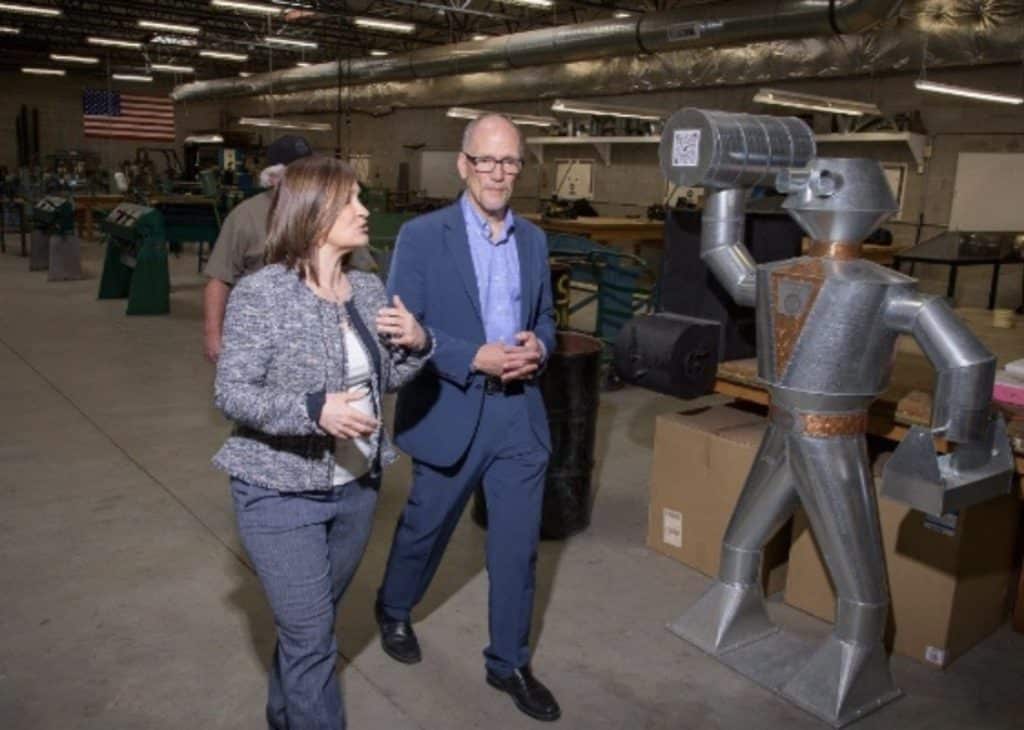
Tom Perez, a senior White House adviser and director of the White House Office of Intergovernmental Affairs, spent March 22, 2024 with Salt Lake County Mayor Jenny Wilson, highlighting local initiatives funded through the American Rescue Plan Act — including a county pre-apprenticeship program to promote apprenticeships and careers in the trades. As part of the day’s itinerary, SMART Local 312 (Salt Lake City, Utah) hosted a meeting with Perez and Wilson at the local’s JATC in West Valley City, where members are training up-and-coming sheet metal workers.

Salt Lake County’s pre-apprenticeship program is funded by $2.8 million from the American Rescue Plan, with the goal of helping 240 aspiring tradespeople become Utah’s next generation of union workers and build the future of our country

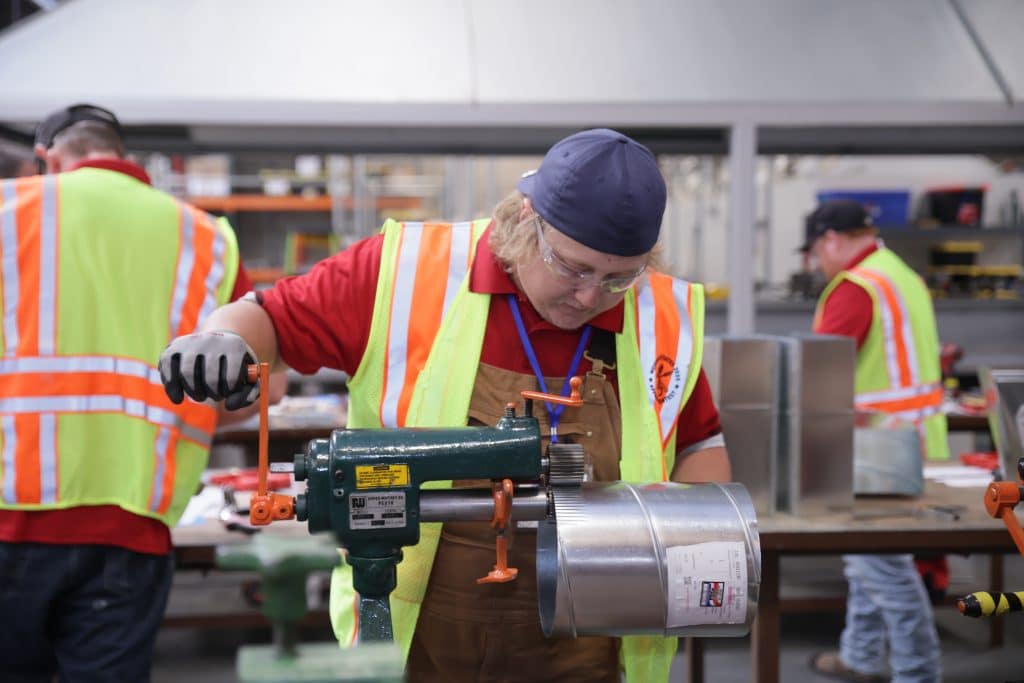
That bright future was on full display at the Local 312 JATC, as Perez and Wilson toured the training center and witnessed apprentices working on layout and project fabrication. Perez met with several members of Local 312, including Apprenticeship Coordinator Gordon Hyde, as well as Matt Brumbaugh and Derek Chapman, the JATC’s two fulltime instructors. Together, Hyde, Brumbaugh and Chapman have 64 years of teaching experience at the local, elevating it to the platinum status it has today.

Perez said he was proud of Wilson and other local leaders for investing in local workers.

“The most precious resource we have in any community is our human capital,” Perez said, telling the apprentices: “You are not only entering a great profession, but … a profession that has a brotherhood and a sisterhood that will always have your back.”

The meeting was attended by Local 312 Business Manager Tony Ericksen; Utah Women in the Trades President Concetta Defa; leaders from IBEW Local 354 and Iron Workers Local 27; and other members of the state AFL-CIO and the local building trades.