On February 23, 2026, workers at SPX Cooling Technologies, LLC in Springfield, Missouri, voted to ratify their first contract as SMART members. The three-year agreement includes a $1,500 ratification bonus, wage increases of over 11%, the preservation of health and retiree benefits and just cause protection against unfair discipline.

The victory came from workers who were organized to stand together and utilize labor’s oldest and most powerful weapon: the strike! On two different instances in November 2025, SPX workers struck, first for one day to protest the company’s removal of low-rise chairs from the workplace, and then once more for two days to protest the company’s hostile and callous response.

“We went to the picket line. We had our signs out there. We let the company know that this is not acceptable to us,” said SPX employee and SMART Local 208 member Andrew Stracke.

“The majority of our shop is looking for union representation”

SPX Cooling Tech employees at the Springfield facility, which opened in 2024, manufacture cooling towers and air-cooled heat exchangers; cooling towers, in particular, are in high demand as investment increases in data centers. The components that SPX employees manufacture are vital for the continued boom in data center construction.

Workers started to talk about organizing in response to various issues in the shop. Stracke, a Local 208 negotiating committee member who has worked at SPX since 2024, alleged instances of favoritism, different wage rates for different people, inconsistent discipline policies and more.

“I was actually the one that placed the call to [a union] office up in St. Louis,” Stracke recalled. “And I felt like the first thing I told them was, ‘look, the majority of our shop is looking for union representation.’”

“Me and Andrew, we were just kind of talking with each other one day about, you know, the unfair working conditions that we were experiencing at the time at the shop. We were just kind of trying to figure out what we could do about it. It was just regular old employees,” added fellow SPX worker and negotiating committee member Wyatt King. “One employee by yourself, you know, you’re not going to have a lot of weight behind you, but when you organize into a union, you can actually address unfair working conditions and unfair wages.”

Members demand a change

The workers at SPX Cooling Technologies in Springfield overwhelmingly elected SMART Local 208 to represent them in a July 2025 National Labor Relations Board (NLRB) election.

But despite the workers’ strong support for the union, SPX initially opposed their organizing. The day after workers won their election, management took away the low-rise chairs that workers used on the job, forcing them to work on their knees.

“I was just astonished … everybody was just kind of like, ‘well, you know, it’s clear retaliation towards electing a union to represent us,’” said King. “I mean, some of those guys in the shop are 60 years old working on the concrete, on their knees all day.”

On Friday, November 7, workers engaged in a one-day grievance strike over the removal of chairs. The strike was covered by the Springfield News-Leader newspaper.

“Any concerns that we’ve raised, whether it’s about chairs, retaliation, harassment, intimidation — they’ve just stonewalled us on all of it. There’re no discussions,” SMART Central States Regional Production Council Organizer Richard Harris said in an article in the News-Leader. “We should be able to sit down and talk about these issues and resolve them. We shouldn’t have to resort to this.”

Workers attempted to serve their strike notice on an SPX supervisor. But the supervisor refused to meet with them. Instead, a woman workers identified as the supervisor’s wife pulled up to the picket line in a white sedan with two anti-union signs taped to her back windows. One read: “F**k the Union.” The other: “Do what lil b*tches do best while down on your knees!!!” She proceeded to drive back and forth in front of the picket line, shouting profanities at the workers and threatening to have them arrested.

The week after the strike, workers submitted a harassment complaint with SPX’s General Counsel in Charlotte, N.C., regarding the signs. The complaint was signed by nearly everybody in the shop. In the meantime, management continued to threaten workers for participating in the strike. One worker who took part in the strike was verbally reprimanded for “not walking with a purpose.” 

Unsatisfied with SPX’s handling of their harassment complaint, workers struck a second time on November 24 and 25. Picket signs read: “Walk with purpose! We strike today!”

Direct action gets the goods

Seasoned union leaders know how difficult first contract campaigns are. The legal consequences for bargaining in bad faith are next to nothing — a notice posting and promise not to do it again — so many employers adopt a strategy of endless delay. According to recent studies, 63% of first contracts fail to settle in one year, and 43% are still unresolved after two. The average time from NLRB certification to first contract — if one is ever reached — is 465 days!

How, then, did SPX workers manage to win their first contract in under six months? By recognizing the structural power they have within the data center economy, and by taking direct action to resolve their grievances. The strikes had an immediate effect on SPX’s demeanor at the bargaining table. Company representatives freely admitted the top priority was getting units assembled and out the door, which the strikes interfered with. Before the strikes, the company was agreeing to meet to bargain once every six weeks; after the strikes, the parties were meeting six days per month.

Collective strength and common ground

In the following months, Local 208 members say, the workers stood strong. And when they voted to ratify their first contract as SMART members, their agreement included a clause requiring the company to provide low-rise chairs.

“We’ve held so many meetings with the bargaining unit, and the participation has been outstanding,” said Stracke. “We have a really high percentage of people that work in the facility that are completely on board. They’re completely invested, they’re excited to see what working with this union and negotiating a contract, what could come of it. And already we have seen the union step up whenever they needed to step up, and give us answers when we need answers.”

In turn, the negotiating committee reports, the relationship between workers, Local 208 and management has started to improve.

“I think we’re in the middle of establishing a great line of communication and work relationships between the company, the employees and the union, and hopefully, this is a relationship that we’re able to keep going even beyond our first contract,” said Logan Hirst, SPX worker and Local 208 negotiating committee member.  

Other members of the negotiating committee are similarly optimistic about the road ahead — largely because, as SMART members, they’re not just individuals at work anymore. They’re part of something bigger.

“We’re not just bringing up our complaints to management, and they just do whatever they want with it. We actually have a voice, we have a lot of weight behind us now, and they actually have to listen to us,” said King. “They have to negotiate fairly. … We’re all standing together to make real change in our workplace.”

The SMART difference:
  • Workers at SPX Cooling Technologies, LLC in Springfield, Missouri, voted to ratify their first contract as SMART members in February.
  • The three-year agreement includes a $1,500 ratification bonus, wage increases of over 11%, the preservation of health and retiree benefits and just cause protection against unfair discipline.
  • On two different instances in November 2025, SPX workers struck, first for one day to protest the company’s removal of low-rise chairs from the workplace, and then once more for two days to protest the company’s hostile and callous response.
  • The average time from NLRB certification to first contract — if one is ever reached — is 465 days. SPX workers won their first contract in under six months.

In January 2026, SMART Local 1 (Peoria, Illinois) announced the successful signing of Prow’ess Construction Corp. as a signatory contractor and the completion of a highly specialized workforce request for an international Federal Aviation Administration (FAA)-regulated project. This effort was led by Local 1 Business Manager Dave Gamber and Organizer Domenic Theison, reinforcing Local 1’s commitment to supplying highly skilled union labor for complex and specialized projects.

Prow’ess Construction Corp., headquartered in Springfield, Illinois, and located within the jurisdiction of SMART Local 218, was awarded a project involving the installation of a copper roofing system at the main airport in Turks and Caicos. The copper roof is a critical component of the airport’s antenna grounding system, requiring highly skilled sheet metal workers capable of passing a stringent FAA-observed soldering certification test.

SMART Local 218, through Organizer Mitch Noll and Business Manager Rich Manka, made efforts to staff the project locally; however, members were not willing to travel internationally for the duration of the work. As a result, and in the spirit of cooperation and solidarity across our union, Local 218 referred Prow’ess Construction to Local 1 to assist in fulfilling the workforce needs.

Under the leadership of Gamber and Theison, Local 1 successfully stepped in to meet the contractor’s needs and ensure the project moved forward with union craftsmanship.

At the request of the FAA, soldering certification testing was conducted under direct FAA supervision at Local 1’s training facility. Two Local 1 members — Jared Clymer and Jim Emanuels — successfully passed all required testing and received FAA approval to perform the work overseas. Both members are now authorized to complete the installation at the Turks and Caicos airport, representing Local 1 and the sheet metal workers’ trade at the highest professional level.

This project highlights the strength of inter-local cooperation, the effectiveness of union training programs and the ability of Local 1 to supply highly skilled labor for technically demanding, FAA-regulated international work.

The core value of SMART and the labor movement is soli­darity: the idea that when working peo­ple stand together, we can win real power for ourselves and our families. It is a principle that connects working people across cities, states and nations; industries, crafts and life experience. And it is the foun­dation for every major gain working people have made throughout North American history.

Local 26 members put SMART solidarity on full display in December of 2025, walking the picket line alongside striking Starbucks workers in Reno, Nevada. The Reno Starbucks workers, along with thousands of Starbucks workers nationwide, were on an unfair labor practice strike, demanding a fair contract and an end to union busting.

An injury to one is an injury to all. Great work, brothers and sisters!

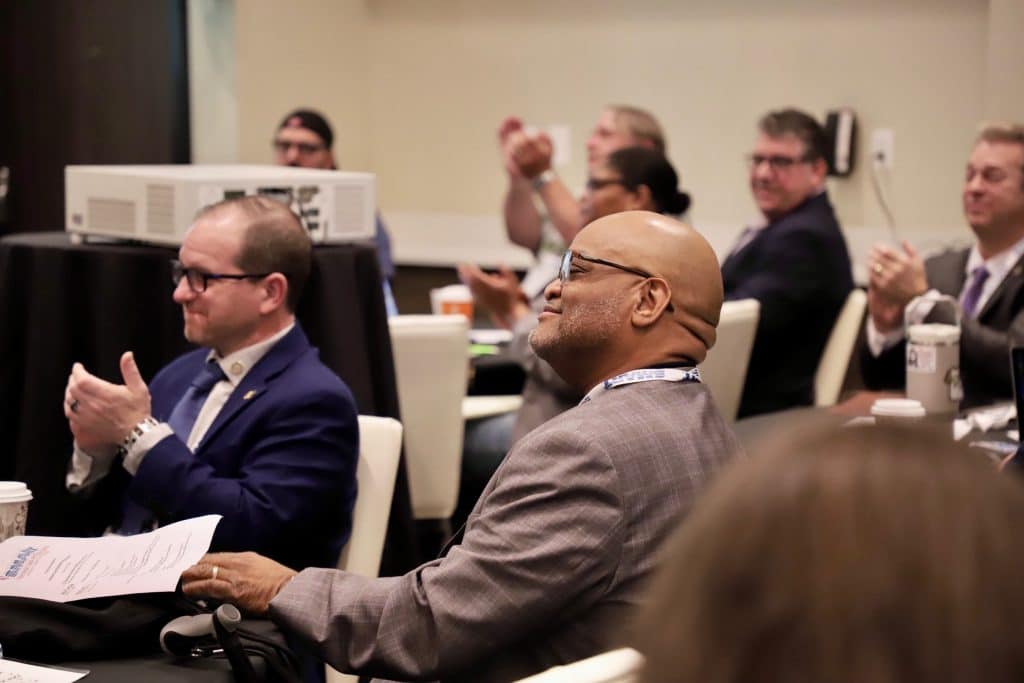
Pittsburgh welcomed SMART leaders, staff and members as the Recruitment and Retention Council kicked off the first day of the Three-Pack Attack — the three-day meeting of the Recruitment and Retention, Production and Sign, and Roofing and Building Enclosure Councils.

The day opened with a welcome from Geoff Foringer, Local 12 business manager, who greeted attendees on behalf of the host city. Foringer highlighted Pittsburgh’s deep cultural roots, proud sports tradition and important place in the history of the American labor movement.

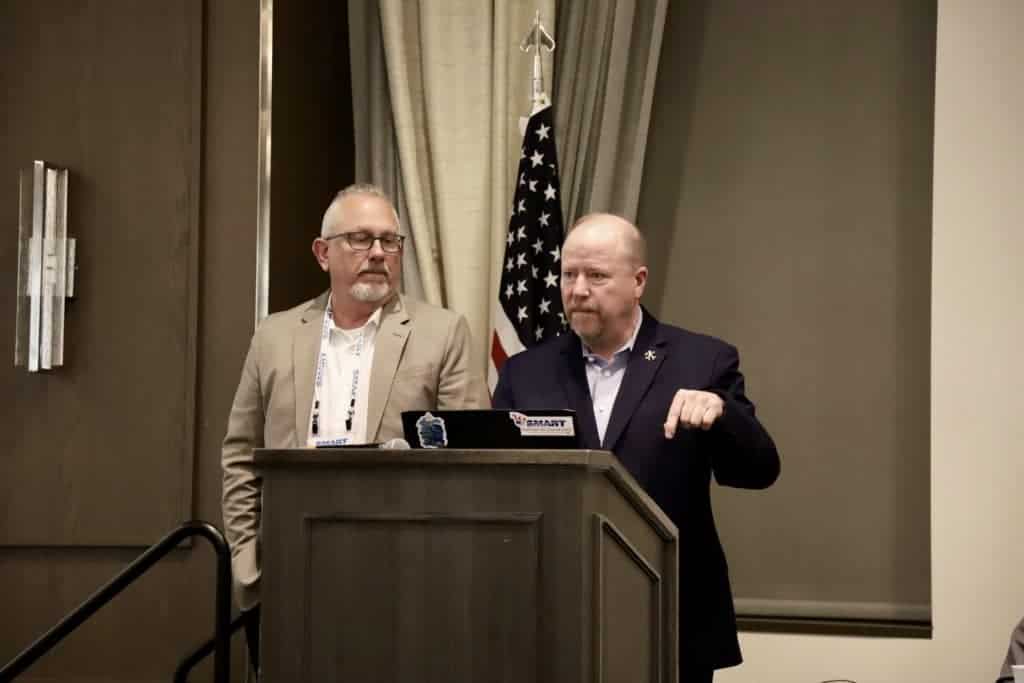
Opening remarks followed from Tom Wiant and Lance Deyette, SMART assistants to the general president. They discussed new SMART International initiatives underway across the the United States and Canada, emphasizing the importance SMART leadership places on hearing directly from local leaders and members. That feedback, they noted, is essential as our union continues working to improve the lives of SMART members and their families.

The meeting featured a full slate of presentations focused on organizing, member support, recruitment and retention. Jason Benson, SMART director of organizing, shared updates on SMART’s organizing priorities and ongoing efforts to grow our union.

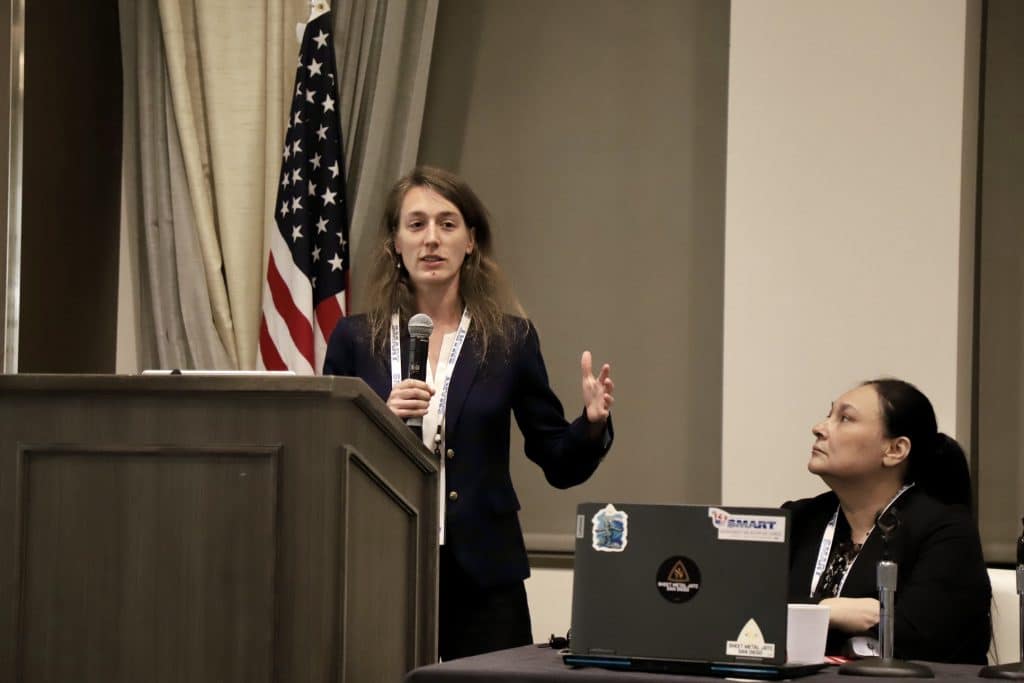
That was followed by a presentation on new developments in SMART’s child care partnership with TOOTRiS, led by Louise Medina, director of special projects, and Tiffany Finck-Hayes, governmental affairs representative. SMART General Vice President and Local 85 (Atlanta) Business Manager Steve Langley, along with Local 5 (East Tennessee) Business Manager Christian Fuller, also discussed how their locals are using child care support to make the trade more accessible to new recruits — and to help keep members in the industry.

The morning wrapped up with a presentation on how the International Training Institute is supporting recruitment and retention efforts, as well as the work of the RISE Committee. The presentation was delivered by Tammy Meyen, ITI field staff — recruitment and retention specialist, and Dale Clark, RISE Committee chair and ITI OSHA specialist.

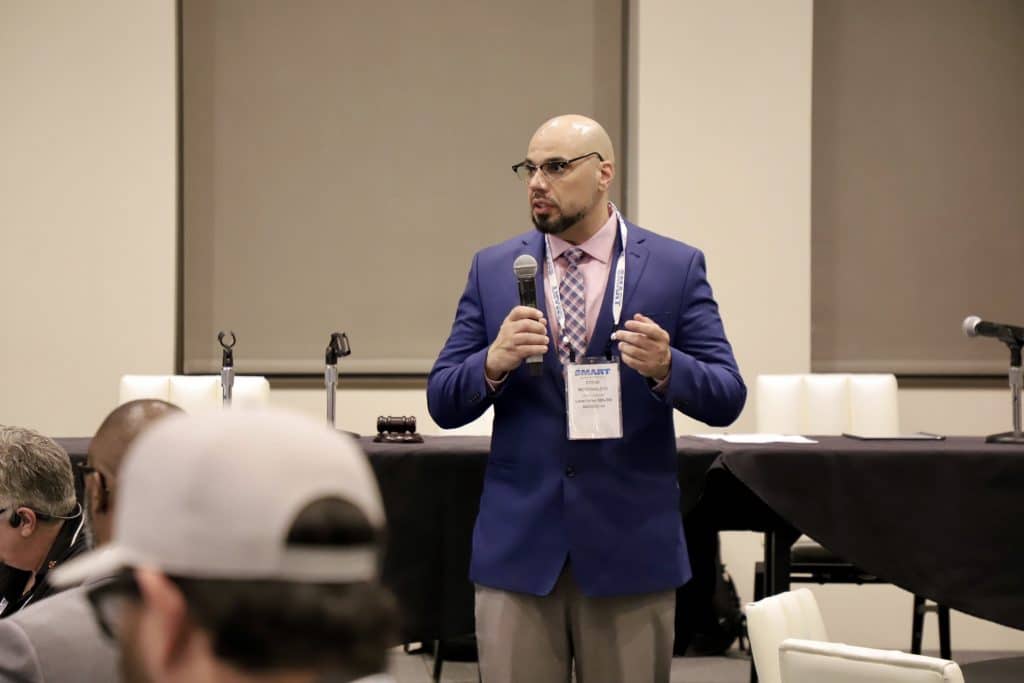
In the afternoon, the council turned its focus to workplace protections, workforce development and practical recruitment tools. David Ortiz-Whittingham, construction organizer with Worker Justice, presented on protecting immigrants at work and in the community, taking questions from attendees on a range of issues impacting immigrant workers and their families.

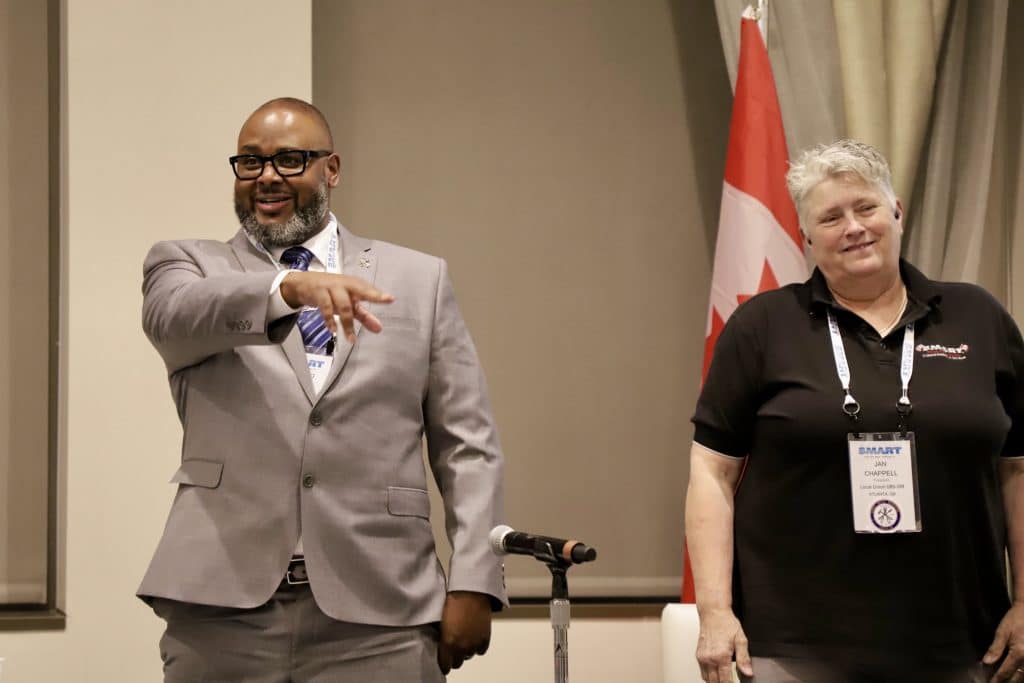
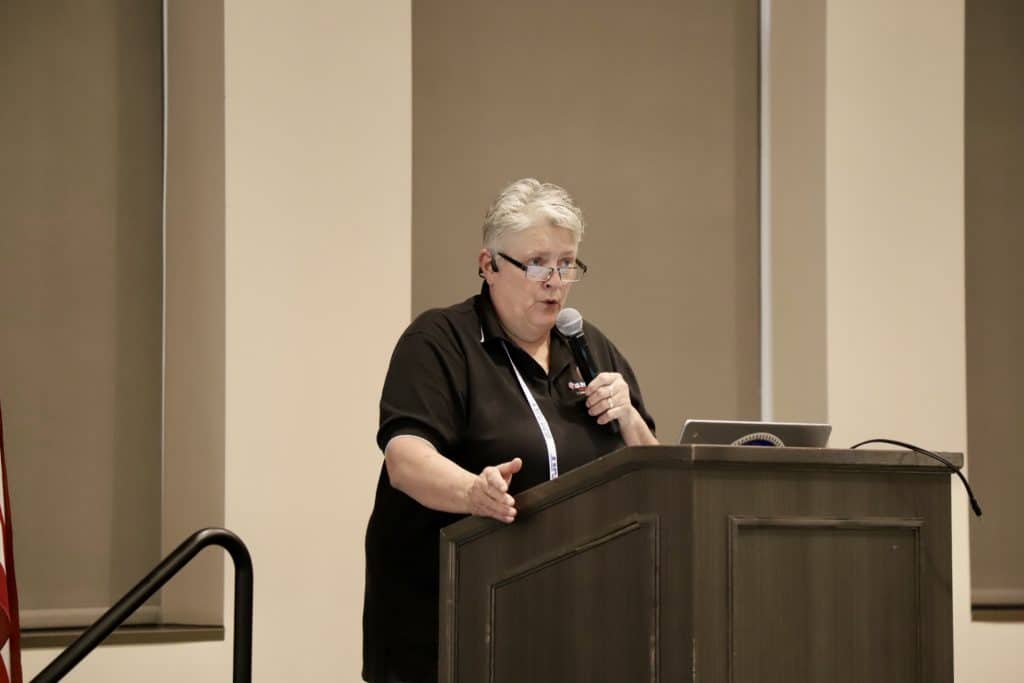
The session also included a BE4ALL Toolbox Talk led by Jan Chappell, Recruitment and Retention Council recording secretary.

All told, the day’s agenda reflected SMART’s continued commitment to organizing, supporting members, strengthening local unions and building real pathways into the trade. From child care and worker protections to recruitment tools and workforce partnerships, the first day in Pittsburgh centered one shared goal: expanding opportunity for current and future SMART members.

Organizing is the foundation of the labor movement, and it remains the key to SMART’s health and strength to this day. Bringing unorganized workers into our union is how we grow union density, maintain the health of our funds and build our strength at the bargaining table.

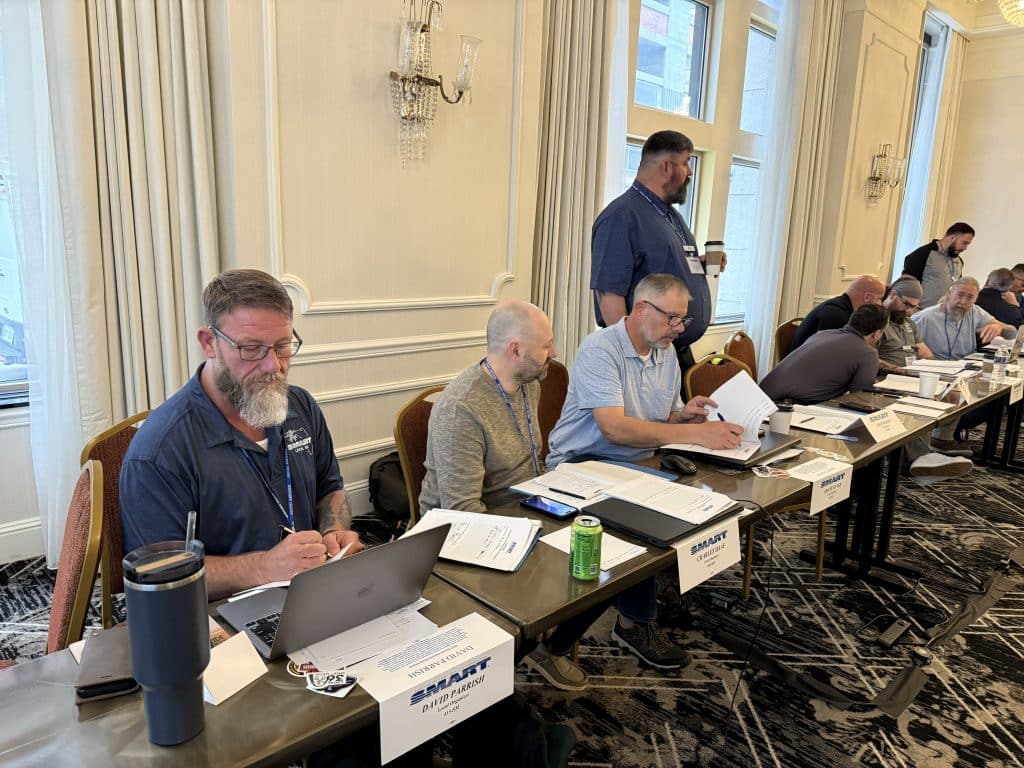
For that reason, the SMART Education Department held its Bottom-Up Organizing class in St. Louis, Mo., during the week of April 13, 2026. The class focuses on developing practical competency in the process and skills required to successfully run bottom-up organizing campaigns.

Participants worked in small “local union” teams in a comprehensive role-play that mimicked a bottom-up campaign throughout the entire week. Each fictional local union worked as an organizing team and role-played the workers at the companies — Coleman Sheet Metal and Daniel Fabrication — based on character backgrounds provided for the simulation. 

Each team was ranked by their performance in a mock union election at the end of the class. The fictional Local 2 group — Scott Olson (Local 18), Juan Amaya (Local 28), John Gjokaj (Local 38), Kyle Determan (Local 263) and Joe Watters (Local 285) — was the top local in the class based on highest election win percentage. 

“Participants were very engaged in the role-play and were observed organizing each other outside of class time,” said SMART Director of Education Eli Baccus. “Everyone did a fantastic job working with their groups and playing their parts. Well done, everyone!”

Good partnerships in the union sheet metal industry don’t happen by accident. They’re built the same way anything worth a damn is built: with time, trust and hard work.

That’s exactly how things got rolling between Local 12 (Pittsburgh, Pa.) and Avalotis Corporation.

Back on October 14, 2025, Local 12 Business Manager Geoff Foringer connected the local with Chris Avalotis, owner of Avalotis Corp. Chris isn’t new to the skilled trades, and he knew what he was looking for. Avalotis Corp started as a family painting business more almost 60 years ago, in 1967. In the decades since, the company has grown into a multi-trade operation, taking on jobs across the country.

During the conversation with Foringer, Chris made it clear what he needed: skilled workers who could deliver on architectural work at a higher level. While his company was already performing that work, he saw something different in what Local 12 brings to the table.

About a week after the first meeting between Avalotis and Local 12, the conversation moved from the phone to the field.

On October 23, Foringer and International Organizer Shane Vermilye sat down with Avalotis reps to talk shop — what Local 12 can do, where the local fits, and how SMART can help Avalotis get the job done right. The focus was simple: show the company the value of trained, union sheet metal workers when it comes to architectural applications.

The foundation was set for the potential partnership to grow.

“During this meeting, we outlined how Local 12 could serve as a strategic partner and addressed questions regarding our capabilities,” said Vermilye. “Avalotis expressed strong interest and requested a follow-up visit to tour the training center and learn more about our programs. Plans were made to prepare a contract in anticipation of that visit, with the goal of executing it at that time.”

Of course, like any job, there were a few starts and stops.

On November 11, 2025, Chris reached out to say they’d reconnect after Thanksgiving. That was no problem for Local 12. The lines stayed open: calls, emails and steady communication, “allowing both parties to further develop the relationship and build mutual trust between Local 12 and Avalotis Corporation,” Vermilye said.

That’s how trust gets built in this business.

Fast forward to March 9, 2026. Business Agent Joe Schueler and Vermilye met with Chris and Art Avalotis for a full facility tour and to talk next steps. What came out of that meeting was big:

  • Avalotis is working nationwide
  • They’re planning to partner with SMART sheet metal locals across multiple regions
  • They’re actively looking to bring in more union workers  

And it wasn’t just talk. The company is already looking to put Local 12 members to work, starting with a roofing project in Aliquippa, said Vermilye. On top of that, the company is feeling good about landing insulation and lagging work at a huge project near Homer City, which could mean even more opportunities for SMART sheet metal workers.

All the groundwork paid off on April 6, 2026. Art Avalotis sat down with Foringer and Business Agents Schueler, Dave Boyd and Kodee Bailey to make it official, signing the contract with Local 12.

With ink on paper, the conversation shifted to where it belongs: putting members to work.

Plans are already underway to staff upcoming projects, both locally and nationwide, getting Local 12 members on the job and expanding opportunities across the board. That means:

  • More job opportunities
  • Travel work potential
  • Stronger union presence across multiple jobsites
  • Work that matches our training and skill level

When contractors recognize the value of union labor, everybody wins. And this partnership? It’s just getting started.

That’s why we organize!

Construction is booming in the American Southwest, with current and upcoming projects popping up steadily in New Mexico and Texas. Thanks to the proactive work of SMART International staff and Local 49, union sheet metal workers and local community members are set to benefit.

“Over the past several months, we have focused on proactively identifying and positioning Local 49 ahead of upcoming work opportunities across the Lubbock and Amarillo, Texas, and New Mexico markets,” said SMART International Organizer Willy Solorzano. “Working alongside Local 49 officers Erick Corona and Roy Privitt, we have taken a coordinated approach to tracking megaprojects, conducting site visits and gathering accurate, real-time information to stay ahead of workforce demands.”

A project in Childress, Texas

Megaprojects create enormous opportunity for SMART sheet metal workers, but they can also present challenges for local unions and signatory contractors. To meet those challenges, staff have been out in the field, maintaining consistent communication to identify projects in early stages, monitor those projects’ progress and prepare accordingly. This has helped SMART stay organized, maintain up-to-date project tracking and stay ready for any upcoming opportunities.   

“As a result of this approach, Local 49 staff has successfully met workforce needs on current projects without issues. All workforce requests have been filled in a timely manner, and work continues to move forward smoothly with no disruptions,” said Solorzano. “The ability to anticipate demands and maintain a ready workforce has played a key role in this success.”

What that means in practice: Local 49 members are taking on the existing work that these projects demand, and the local is positioning itself for growth — and more job opportunities — in the future. That is why we organize!

On February 23, 2026, workers at SPX Cooling Technologies, LLC in Springfield, Missouri, voted to ratify their first contract as SMART members. The three-year agreement includes a $1,500 ratification bonus, wage increases of over 11%, the preservation of health and retiree benefits and just cause protection against unfair discipline.

The victory came from workers who were organized to stand together and utilize labor’s oldest and most powerful weapon: the strike! On two different instances in November 2025, SPX workers struck, first for one day to protest the company’s removal of low-rise chairs from the workplace, and then once more for two days to protest the company’s hostile and callous response.

“We went to the picket line. We had our signs out there. We let the company know that this is not acceptable to us,” said SPX employee and SMART Local 208 member Andrew Stracke.

“The majority of our shop is looking for union representation”

SPX Cooling Tech employees at the Springfield facility, which opened in 2024, manufacture cooling towers and air-cooled heat exchangers; cooling towers, in particular, are in high demand as investment increases in data centers. The components that SPX employees manufacture are vital for the continued boom in data center construction.

Workers started to talk about organizing in response to various issues in the shop. Stracke, a Local 208 negotiating committee member who has worked at SPX since 2024, alleged instances of favoritism, different wage rates for different people, inconsistent discipline policies and more.

“I was actually the one that placed the call to [a union] office up in St. Louis,” Stracke recalled. “And I felt like the first thing I told them was, ‘look, the majority of our shop is looking for union representation.’”

“Me and Andrew, we were just kind of talking with each other one day about, you know, the unfair working conditions that we were experiencing at the time at the shop. We were just kind of trying to figure out what we could do about it. It was just regular old employees,” added fellow SPX worker and negotiating committee member Wyatt King. “One employee by yourself, you know, you’re not going to have a lot of weight behind you, but when you organize into a union, you can actually address unfair working conditions and unfair wages.”

Members demand a change

The workers at SPX Cooling Technologies in Springfield overwhelmingly elected SMART Local 208 to represent them in a July 2025 National Labor Relations Board (NLRB) election.

But despite the workers’ strong support for the union, SPX initially opposed their organizing. The day after workers won their election, management took away the low-rise chairs that workers used on the job, forcing them to work on their knees.

“I was just astonished … everybody was just kind of like, ‘well, you know, it’s clear retaliation towards electing a union to represent us,’” said King. “I mean, some of those guys in the shop are 60 years old working on the concrete, on their knees all day.”

On Friday, November 7, workers engaged in a one-day grievance strike over the removal of chairs. The strike was covered by the Springfield News-Leader newspaper.

“Any concerns that we’ve raised, whether it’s about chairs, retaliation, harassment, intimidation — they’ve just stonewalled us on all of it. There’re no discussions,” SMART Central States Regional Production Council Organizer Richard Harris said in an article in the News-Leader. “We should be able to sit down and talk about these issues and resolve them. We shouldn’t have to resort to this.”

Workers attempted to serve their strike notice on an SPX supervisor. But the supervisor refused to meet with them. Instead, a woman workers identified as the supervisor’s wife pulled up to the picket line in a white sedan with two anti-union signs taped to her back windows. One read: “F**k the Union.” The other: “Do what lil b*tches do best while down on your knees!!!” She proceeded to drive back and forth in front of the picket line, shouting profanities at the workers and threatening to have them arrested.

The week after the strike, workers submitted a harassment complaint with SPX’s General Counsel in Charlotte, N.C., regarding the signs. The complaint was signed by nearly everybody in the shop. In the meantime, management continued to threaten workers for participating in the strike. One worker who took part in the strike was verbally reprimanded for “not walking with a purpose.” 

Unsatisfied with SPX’s handling of their harassment complaint, workers struck a second time on November 24 and 25. Picket signs read: “Walk with purpose! We strike today!”

Direct action gets the goods

Seasoned union leaders know how difficult first contract campaigns are. The legal consequences for bargaining in bad faith are next to nothing — a notice posting and promise not to do it again — so many employers adopt a strategy of endless delay. According to recent studies, 63% of first contracts fail to settle in one year, and 43% are still unresolved after two. The average time from NLRB certification to first contract — if one is ever reached — is 465 days!

How, then, did SPX workers manage to win their first contract in under six months? By recognizing the structural power they have within the data center economy, and by taking direct action to resolve their grievances. The strikes had an immediate effect on SPX’s demeanor at the bargaining table. Company representatives freely admitted the top priority was getting units assembled and out the door, which the strikes interfered with. Before the strikes, the company was agreeing to meet to bargain once every six weeks; after the strikes, the parties were meeting six days per month.

Collective strength and common ground

In the following months, Local 208 members say, the workers stood strong. And when they voted to ratify their first contract as SMART members, their agreement included a clause requiring the company to provide low-rise chairs.

“We’ve held so many meetings with the bargaining unit, and the participation has been outstanding,” said Stracke. “We have a really high percentage of people that work in the facility that are completely on board. They’re completely invested, they’re excited to see what working with this union and negotiating a contract, what could come of it. And already we have seen the union step up whenever they needed to step up, and give us answers when we need answers.”

In turn, the negotiating committee reports, the relationship between workers, Local 208 and management has started to improve.

“I think we’re in the middle of establishing a great line of communication and work relationships between the company, the employees and the union, and hopefully, this is a relationship that we’re able to keep going even beyond our first contract,” said Logan Hirst, SPX worker and Local 208 negotiating committee member.  

Other members of the negotiating committee are similarly optimistic about the road ahead — largely because, as SMART members, they’re not just individuals at work anymore. They’re part of something bigger.

“We’re not just bringing up our complaints to management, and they just do whatever they want with it. We actually have a voice, we have a lot of weight behind us now, and they actually have to listen to us,” said King. “They have to negotiate fairly. … We’re all standing together to make real change in our workplace.”

The SMART difference:
  • Workers at SPX Cooling Technologies, LLC in Springfield, Missouri, voted to ratify their first contract as SMART members in February.
  • The three-year agreement includes a $1,500 ratification bonus, wage increases of over 11%, the preservation of health and retiree benefits and just cause protection against unfair discipline.
  • On two different instances in November 2025, SPX workers struck, first for one day to protest the company’s removal of low-rise chairs from the workplace, and then once more for two days to protest the company’s hostile and callous response.
  • The average time from NLRB certification to first contract — if one is ever reached — is 465 days. SPX workers won their first contract in under six months.

By Justin Wingard, Local 399

SMART membership changes lives — not just for members, but for entire families. Local 399 (South Carolina) member Fabian Campos is a powerful example.

Fabian Campos, right, with his son, a Local 399 apprentice

On May 30, 2025, Brother Campos walked into the SMART Local 399 office to complete an application and interview. At the time, he was nearing the end of a nonunion apprenticeship program in Columbia, South Carolina. Despite having several years of verified experience — including time as a jobsite superintendent in New York — Campos had been placed into an apprenticeship program that did not reflect his skill level.

Like many hardworking Americans nationwide, he accepted this situation out of necessity, determined to support his family even as he earned wages that fell short of meeting their needs.

The unfairness of the situation brought him to the local, where during his interview, it quickly became clear that Campos’s experience and capabilities aligned with the qualifications of a journeyperson. We discussed the opportunities available through SMART Local 399 not only for Fabian but also for his son — including fair wages, comprehensive benefits and a clear pathway for advancement.

The realization of the union difference made an immediate and profound impact. Overcome with emotion, Fabian expressed deep gratitude, recognizing that this opportunity represented a turning point for his family.

Since joining Local 399, Brother Campos has excelled. He is now serving as a foreman on one of our largest projects, demonstrating leadership, skill and professionalism on the jobsite. His son has also joined the apprenticeship program and is actively building his own future within the trade.

Fabian has fully embraced union membership, going above and beyond to give back. He volunteers his time to help organize, teach, translate and mentor others. He has enrolled in every available training class and consistently attends union meetings, embodying SMART’s values of commitment and brother/sisterhood.

Brother Campos’s story is a testament to the life-changing impact of opportunity, fairness and solidarity; in other words, the impact of union membership. Through SMART Local 399, one family’s future has been transformed, and a new leader has emerged to help uplift others.

SMART membership changes lives for:

  • Members
  • Families
  • Communities

Through the power of collectively bargained pay, benefits and apprenticeship programs that provide pathways into middle-class careers.

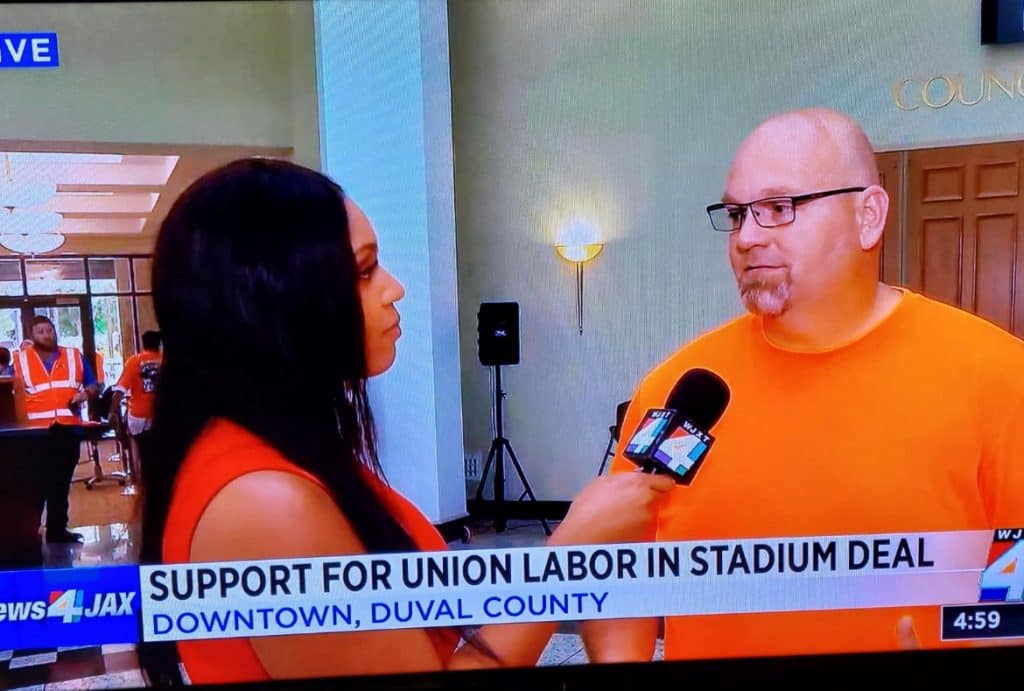
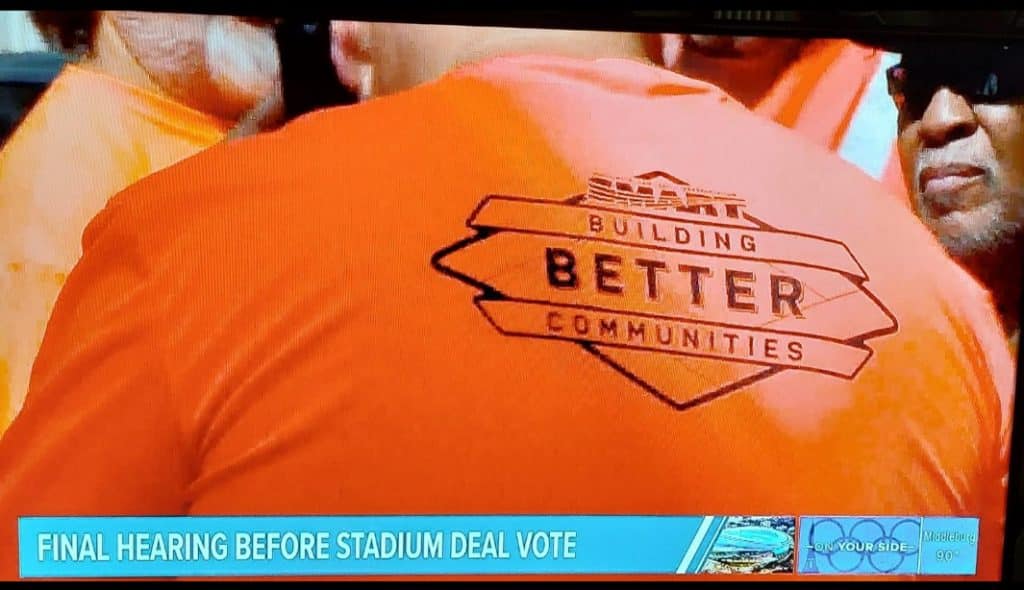
Back in spring 2025, SMART Local 435 and organized labor announced a landmark victory in Jacksonville, Florida. Thanks to the unrelenting advocacy of Local 435 and the North Florida Building and Construction Trades Council, in a campaign led by Business Manager Lance Fout, the $1.4 billion Jacksonville Jaguars stadium renovation project included mandatory apprenticeship and local hiring requirements for the stadium and future city-funded developments.

“This is a first in Jacksonville, and hopefully a trend we can continue,” Fout said at the time.

Lance Fout, Local 435 and building trades workers lobbied for pro-worker provisions on the new Jaguars stadium.

Members mobilize in support of local careers

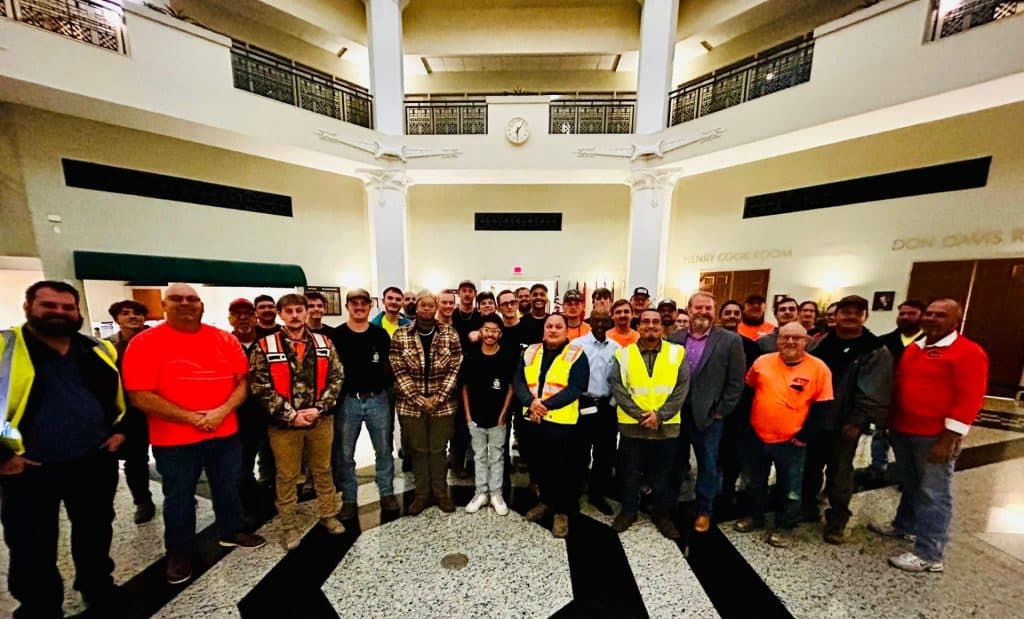
The campaign started when the stadium project was first announced. Fout, Local 435 and the building trades maintained a constant presence in the halls of power, working to ensure public investment by the city of Jacksonville benefited the local community. Together with fellow union building trades workers, Fout and Local 435 held several rallies, urging the city council to include apprenticeship and local hire requirements in the stadium deal, and turned out more than 100 union members to attend a town hall meeting with Mayor Deegan and Jaguars President Mark Lamping. Members continued to mobilize for future meetings.

This visible show of solidarity and direct engagement with city officials successfully moved the needle from simple interest to legislative action, with the inclusion of the apprenticeship and local hire requirements in the final stadium deal.

But the work didn’t stop there. To implement those requirements, Local 435 led the charge in securing a commitment for up to $675,000 in funding to support union apprenticeship programs in Jacksonville. These robust training programs do more than staff a jobsite; they will transform temporary construction roles into decades-long, middle-class careers for the residents of Duval County.

Construction of the stadium has since started, with union sheet metal contractors already awarded the critical HVAC ductwork and exterior architectural applications. Now, as the project scales toward its 2027 peak intensity and 2028 completion, it serves as a blueprint for how organized labor can secure the future of cities across the United States. Enormous projects can work for the communities in which those projects are built — as long as they create good, well-paying jobs for local community members.   

Fout put it simply when he testified to the Jacksonville City Council: “When we drive by these major projects, we want to see Duval County license plates. Apprenticeship changes lives.”

Thanks to the work of Local 435 and the North Florida labor movement, union apprenticeships will change more and more lives in the county as the “Stadium of the Future” comes to fruition.

Great work, brothers and sisters!

Success Summary:

  • Policy Victory: Established mandatory apprenticeship and local hiring requirements for city-funded projects.
  • Training Investment: Secured a commitment for up to $675,000 to expand and support union apprenticeship programs in Jacksonville.
  • Collective Mobilization: Maintained a consistent presence of 50+ building trades members (primarily Local 435) at public meetings.
  • Secured Work Scope: Union contractors officially awarded the HVAC ductwork and exterior architectural metal contracts.
  • Project Timeline: Construction is underway, peaking in 2027 with a scheduled completion in 2028.